
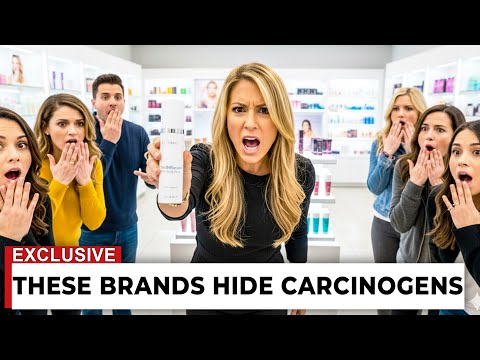
The Great Skincare Reckoning: From Luxury Mirages to Clinical Reality
The year 2025 has marked a catastrophic turning point for the multi-billion dollar beauty industry as the FDA and independent laboratories exposed a reality that marketing departments have spent decades hiding. What started as a whisper about overpriced moisturizers has erupted into a full-scale public health crisis, revealing that many products sitting in millions of bathroom cabinets are not just ineffective, but actively dangerous. From the silent degradation of common acne treatments into leukemia-linked benzene to anti-aging creams containing mercury levels 24,000 times the legal limit, the veneer of “prestige” has finally shattered, leaving consumers to navigate a landscape of fabricated science and toxic contamination.
The most immediate threat involves the chemical instability of Benzoyl Peroxide (BPO), a staple in acne care. Research has confirmed that when exposed to everyday heat—such as a warm bathroom or a car—this compound breaks down into high concentrations of benzene, far exceeding safe inhalation and absorption thresholds. Simultaneously, a global surge in unregulated “brightening” creams has introduced a mercury contamination crisis that bypasses traditional retail safety checks. These products, often sold through social media pipelines, deliver neurotoxic doses that can lead to permanent kidney damage, memory loss, and tremors, all while hiding behind claims of “natural beauty secrets.”
Beyond the physical dangers lies a secondary betrayal: the prestige markup theater. Forensic ingredient analysis has revealed that a $3,000 jar of luxury cream often shares nearly twenty identical foundational ingredients with an $11 drugstore alternative, proving that consumers are frequently subsidizing massive marketing budgets rather than superior biological intervention. The Federal Trade Commission has even stepped in to settle lawsuits against heritage brands that claimed to work at a genetic level, proving that their “gene-boosting” studies were actually observational science rather than proof of product efficacy. This “test tube marketing” uses sophisticated terminology to sell aspiration while delivering little more than basic hydration.
Fortunately, the collapse of these heritage myths has paved the way for a new era of clinical minimalism. Dermatologists are now pointing patients toward evidence-based alternatives that prioritize raw material integrity over aesthetic packaging. By utilizing stabilized L-ascorbic acid at verified concentrations, pharmaceutical-grade peptides that signal collagen production, and plant-based bakuchiol—which clinical trials show matches retinol’s efficacy without the inflammatory trauma—it is now possible to achieve transformative results at a fraction of the prestige cost. The future of skincare is no longer found in the weight of a glass jar, but in the transparency of the ingredient list and the courage to demand clinical proof over cosmetic hope.
#SkincareRoutine #BeautyScams #Dermatology #AntiAging #SkincareScience #BudgetBeauty #FDARecall #ToxicBeauty
These companies should be shut down. 😡
Iost your mind
Omg I was suffering from a Guerlin cream but I definitely did not have an idea about oder brands so damaging
Thankyou, for this information,
They need to pay for there actions
Thank you for this info. It was eye opening to say the least.